Bedtime Stalling: Why Toddlers Always Ask for 'One More'
Toddlers asking for 'one more' book, song, or hug at bedtime isn't manipulation. Here's why stalling happens, and what actually helps it fade.
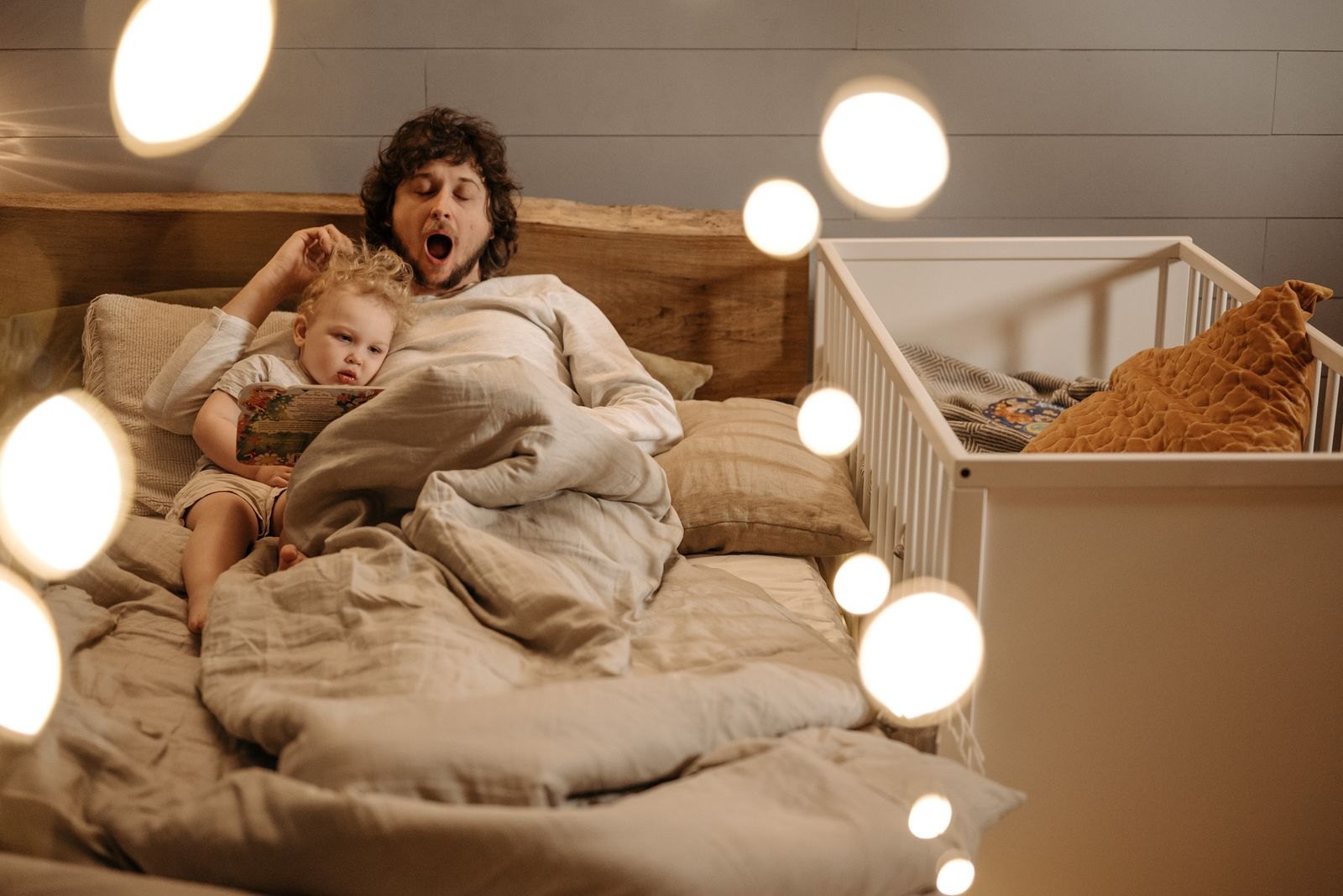
Pediatric sleep research suggests bedtime stalling — the parade of "one more story," "one more hug," and "I need water" that shows up right after lights-out — is common enough in early childhood that sleep researchers describe it as one of the most frequently reported bedtime behaviors parents bring up, affecting a large share of toddlers and preschoolers at some point.
What Parents Commonly Misread
It's easy to hear a fourth request for water in ten minutes and assume a toddler is testing limits on purpose, almost strategically. Stalling usually isn't calculated manipulation — it's a much less deliberate response to the discomfort of separating from a parent at the one moment in the day designed for exactly that.
The second misread is thinking "just this once" won't matter. A single late exception rarely causes lasting harm on its own, but a pattern of occasional exceptions is precisely what keeps stalling going — more on why below.
Why This Happens
Bedtime asks a toddler to do something nothing else in the day requires: separate from a parent, alone, in the dark, for hours. Stalling behaviors are often a toddler's best available tool for delaying that separation, not a sign that they aren't tired — in fact, the more overtired a toddler is, the more likely stalling tends to show up, since an overtired nervous system has a harder time settling even when it desperately needs to.
There's also a well-documented reinforcement pattern behind it. If "one more" is sometimes granted and sometimes refused, a toddler learns — the same way anyone learns from an unpredictable reward — that persistence occasionally pays off. That kind of intermittent reinforcement is one of the strongest patterns for keeping a behavior going, which is part of why bedtime stalling that gets an inconsistent response tends to escalate rather than fade.
What Actually Helps
A clearly defined ending matters more than a longer routine — "two books, one song, lights off" gives a toddler a predictable finish line, which reduces the anxiety that often drives the stalling in the first place. A routine with a vague, negotiable ending invites more negotiation.
Meeting likely requests before they're asked closes off a lot of stalling before it starts: a water cup already on the nightstand, one extra hug built into the routine instead of granted as a bonus for asking, and a nightlight already on all remove the "need" a toddler would otherwise stall to get.
- Decide in advance how many extra requests get honored (often zero, sometimes one) and hold that line the same way every night — consistency does more than any single technique.
- Respond to stalling in a calm, boring, low-engagement way rather than a fresh conversation each time; an animated response, even a frustrated one, is still attention, and attention reinforces the behavior.
- Address overtiredness directly with an earlier bedtime for a stretch — an overtired toddler often stalls harder, not less, so moving bedtime earlier can shorten the stalling rather than extend it.
FAQ
Is it bad to give in occasionally? An occasional exception isn't harmful on its own, but an inconsistent pattern is what tends to keep stalling going — consistency matters more than perfection.
Will a longer routine help more than a shorter one? Not necessarily — a clear, predictable ending tends to matter more than the total length of the routine.
If bedtime has turned into forty-five minutes of "one more," you haven't done anything wrong — this is one of the most common toddler sleep patterns there is, and it usually responds well to a predictable ending and a calm, consistent response held the same way, night after night.
More for this stage
 4 min read1 views
Room-Sharing vs. Own Room: What the AAP Timeline Really Says
The AAP recommends room-sharing for 6-12 months to lower SIDS risk, but it's often confused with bed-sharing. Here's what parents get wrong.
 4 min read1 views
Daylight Saving With a Baby: Spring Forward vs. Fall Back
Spring forward and fall back don't disrupt a baby's sleep the same way. Here's why one is usually harder, and how to handle both transitions.
 4 min read1 views