The 9-Month Sleep Regression: Is It Actually a Sleep Problem?
The 9-month sleep regression usually isn't one problem — separation anxiety, a new motor skill, and nap changes tend to collide. Here's what's really going on.
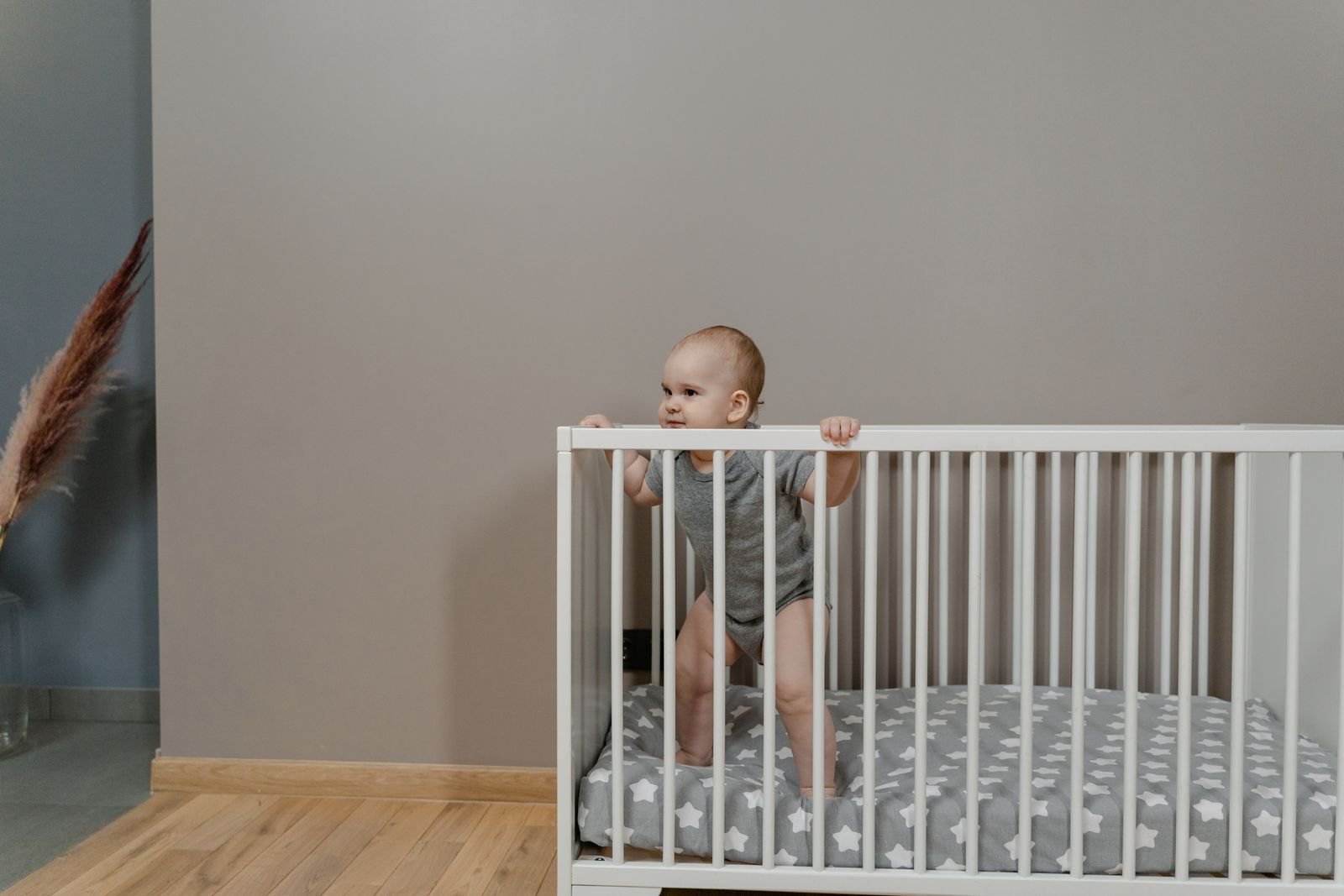
Nine months in, a baby who'd finally settled into a predictable sleep pattern starts waking every couple of hours again, resisting bedtime, and needing far more help getting back down. Parents who remember the four-month regression brace for a repeat performance — but the two aren't the same disruption wearing a different age tag, and treating this one as a single mystery event misses what's actually driving it.
What parents commonly misunderstand
The label "9-month sleep regression" makes it sound like one specific thing is happening, the same way the 4-month shift was one specific change in sleep-cycle structure. In practice, this stage is less a single regression than a collision of several developmental changes that tend to land in the same few-week window — which is part of why it can feel more chaotic and less predictable than the earlier one.
The second misread is treating the extra night waking as a sign your baby is losing skills. The opposite is closer to true: your baby is actively gaining several new abilities at once, and that surge of daytime progress is exactly what's unsettling sleep at night.
Why this happens
Three things commonly overlap around this age. The first is separation anxiety, which tends to intensify in the months following its first appearance around 8 to 9 months as babies develop object permanence — understanding that you still exist even when you're not in the room, without yet having a reliable sense that you're coming back. That uncertainty is often stronger at night, when a baby wakes alone in a dark room and needs to relocate you.
The second is a new gross motor skill: many babies are pulling up to stand or cruising along furniture around this age, and a crib makes a convenient place to practice. A baby who pulls up in the middle of the night doesn't always know how to get back down, and can end up stuck standing and calling for help rather than settling back to sleep on their own.
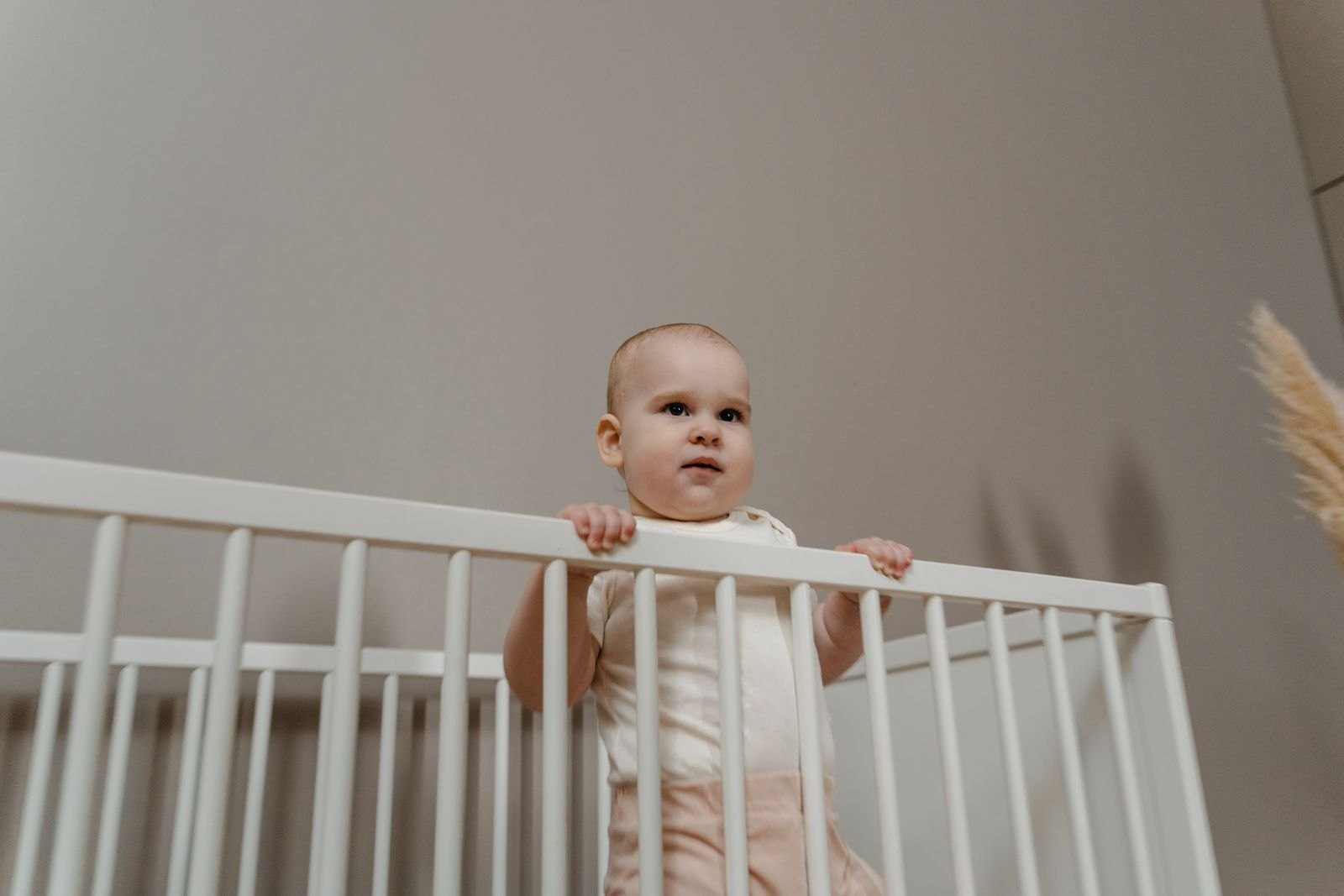
The third is a nap transition. Many babies move from three naps down to two somewhere in this general window, and if the new schedule hasn't caught up with the old one yet, the mismatch in daytime sleep can spill into more fragmented sleep at night.
What actually helps
Because none of these three drivers resolve just by waiting them out, the most useful shift is giving your baby room to practice the new motor skill during the day rather than only at 2 a.m. — supervised standing and cruising time on the floor tends to reduce how much a baby needs to work it out once they're in the crib. Keeping bedtime and wake-up routines consistent, and offering brief, calm reassurance rather than a full pick-up when your baby wakes and calls out, helps separation anxiety settle without creating new sleep associations you'll need to undo later.
If your baby seems to be dropping a nap earlier than expected, adjusting wake windows gradually — rather than cutting a nap all at once — usually smooths the transition faster than forcing it. Most families find this stretch eases within a few weeks as the new skills settle in; if disrupted sleep drags on much longer than that, or comes with other changes in appetite or mood, it's worth mentioning at your next pediatrician visit rather than assuming it's this stage running long.
FAQ
How is this different from the 4-month sleep regression? The 4-month shift is a permanent change in sleep-cycle structure. The 9-month stage is usually a temporary overlap of separation anxiety, a new motor skill, and sometimes a nap transition — once those settle individually, sleep tends to follow.
Should I stop my baby from practicing standing in the crib at night? You don't need to intervene every time — most babies figure out how to sit back down within a few nights of extra floor practice during the day. If your baby seems genuinely stuck and distressed rather than just experimenting, it's fine to go in, help them back down, and keep the visit brief and low-key.
If you remember one thing about this stretch: it's rarely just one issue, and it's rarely permanent — once the motor skill, the nap schedule, and the separation anxiety each settle on their own timeline, the extra waking tends to settle right along with them.
More for this stage
 3 min read1 views
Bedtime Stalling: Why Toddlers Always Ask for 'One More'
Toddlers asking for 'one more' book, song, or hug at bedtime isn't manipulation. Here's why stalling happens, and what actually helps it fade.
 4 min read1 views
Room-Sharing vs. Own Room: What the AAP Timeline Really Says
The AAP recommends room-sharing for 6-12 months to lower SIDS risk, but it's often confused with bed-sharing. Here's what parents get wrong.
 4 min read1 views