Gagging vs. Choking in Baby-Led Weaning: How to Tell
Gagging is a normal, protective reflex during baby-led weaning, and it looks different from choking. Here's how to tell them apart.

Watching a baby gag for the first time during baby-led weaning is one of those moments that can turn a calm kitchen into a five-alarm scare in about two seconds. The sound alone — sudden, loud, and a little alarming — makes almost every new parent's stomach drop, even when nothing is actually wrong. That instinct to panic is completely understandable, but gagging and choking are not the same event, and mixing them up is one of the most common reasons baby-led weaning feels scarier than it needs to be.
What Parents Commonly Misunderstand
The biggest misunderstanding is treating any loud, sudden reaction at the high chair as an emergency. Gagging is a normal, protective reflex that pushes food forward in the mouth before it reaches the airway — it's loud, it looks uncomfortable, and it's supposed to happen while a baby is learning to manage new textures. The American Academy of Pediatrics notes that gagging is expected and common during the early months of solid foods, especially as babies practice moving food around with a tongue and jaw that are still learning the job.
Choking is different in a way that matters enormously: it's usually quiet. When a baby's airway is actually blocked, air can't move past the obstruction to make sound, which means a choking baby often can't cough, cry, or make noise the way a gagging baby does.
Why the Difference Matters
Responding to gagging as though it were choking — pulling food out, panicking, or interrupting a baby mid-cough — can actually make things harder, because it interrupts a reflex that's already working to clear the food on its own. Responding to real choking as though it were ordinary gagging, on the other hand, costs time that matters. The clearest signal is sound: a gagging baby is usually coughing, spluttering, or making retching noises, all of which mean air is still moving. A baby who is silent, whose face is turning blue or very pale, or who can't cough at all needs help immediately.
The Signs, Side by Side
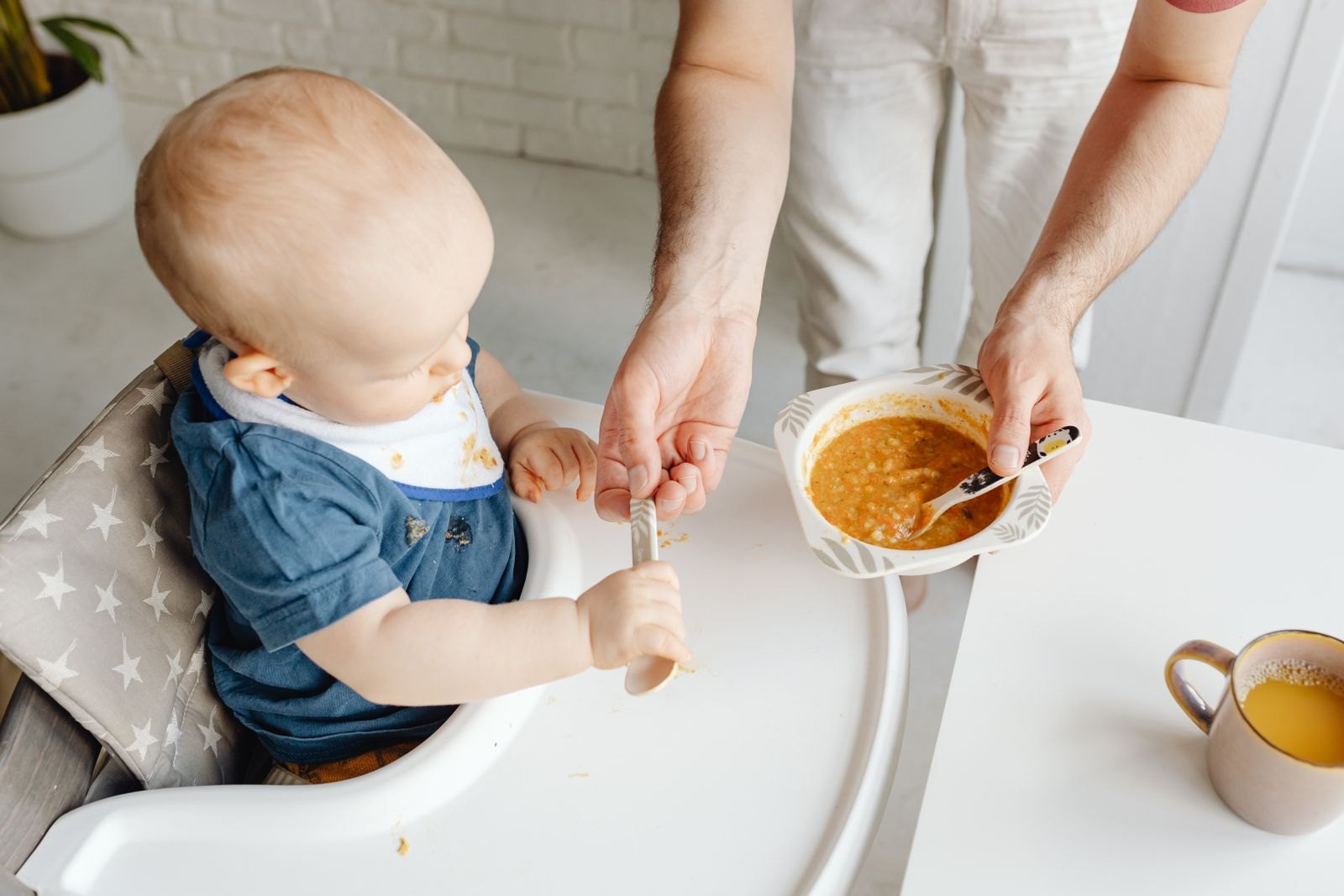
Gagging usually looks like: coughing, sputtering, or retching sounds; watery eyes; food being pushed back out of the mouth; a baby who stays upright and often keeps reaching for food afterward, sometimes without any distress at all once it passes.
Choking usually looks like: little to no sound; a baby who can't cough, cry, or breathe; a panicked or distressed expression; lips, face, or fingertips turning blue or pale; or weak, ineffective coughing that isn't clearing anything. Any of these signs call for immediate action, not observation.
What Actually Helps
Preparing food in ways that match a baby's current chewing ability lowers the odds of true choking substantially — soft, easily squashable pieces cut into shapes a baby can grip, while avoiding foods that are hard, round, or sticky enough to lodge in a small airway (whole grapes, whole nuts, hard candy, popcorn, and chunks of firm meat or cheese are commonly flagged as higher-risk shapes and textures). Staying within arm's reach during meals, keeping a baby upright in a supportive high chair rather than reclined, and avoiding distractions like walking or bouncing while eating all reduce risk further.
Every parent introducing solid foods should learn infant choking response — back blows and chest thrusts — before starting, not after a scare. A short in-person class through the American Red Cross, a local hospital, or a certified instructor takes less than an hour and builds the kind of muscle memory that's hard to improvise in the moment. If a baby ever shows real choking signs — silence, blueness, inability to cough — begin infant back blows and chest thrusts immediately and call emergency services if the object doesn't clear right away.
- Cut food into pieces sized and shaped for a baby's current stage, and avoid classic high-risk shapes like coins, rounds, and whole nuts.
- Stay within arm's reach for every meal, especially in the early weeks of self-feeding.
- Take an infant CPR and choking-response class before starting solids, and keep the skills refreshed as a baby grows.
FAQ
Is frequent gagging a sign baby-led weaning isn't working? Occasional gagging is expected, especially in the first few weeks. If it happens at nearly every meal for an extended stretch, or seems to be getting worse rather than easing, talk to a pediatrician about food textures and pacing rather than assuming it will resolve on its own.
Should I stop baby-led weaning if my baby gags a lot? Not necessarily — but if gagging is frequent or causing real distress, consult a pediatrician about adjusting food size, texture, or pace before deciding whether to stop.
The next time a loud gag makes it to the dinner table, it might help to pause for one question before reacting: is my baby making noise? If the answer is yes, the reflex that's supposed to be working is working — and if there's ever real doubt, a conversation with a pediatrician about readiness, technique, or food choices is always worth having.
More for this stage
 4 min read1 views
Food Jags: Why Toddlers Get Stuck on One Food
Food jags—when a toddler eats only one meal for days—are common and usually pass on their own. Here's why they happen and what actually helps.
 3 min read1 views
Baby-Led Weaning vs. Purees: It Isn't an Either-Or Decision
Baby-led weaning and purees get pitched as competing philosophies, but research finds no clear winner on choking, growth, or iron. Here's how to choose.
 4 min read1 views