Newborn Hair Loss: 3 Things Parents Get Wrong
Clumps of newborn hair falling out can look alarming, but it's usually a normal hormone-driven cycle. Here's why it happens and when hair typically grows back.
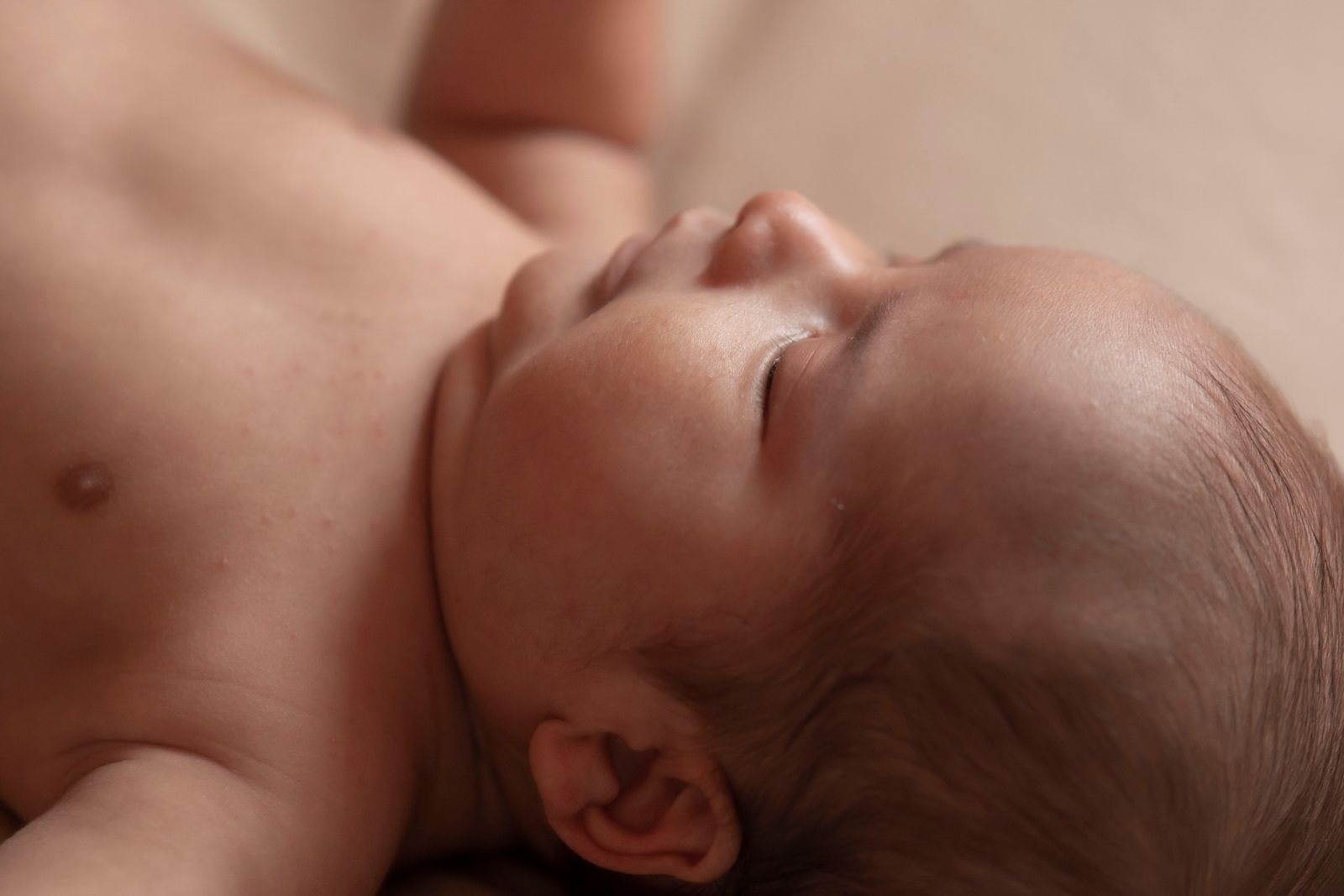
Finding a clump of hair on the sheet under your newborn's head — or noticing a hairline that seemed to thin out within a matter of weeks — is one of those moments that can send even calm parents straight into a worried spiral. It looks like something is wrong. In the overwhelming majority of cases, newborn hair loss is a normal, expected part of the first few months and not a sign that anything is off with your baby. Still, "normal" doesn't mean it's obvious what's actually happening, and a few common mix-ups tend to make it feel scarier than it needs to be.
3 Things Parents Get Wrong About Newborn Hair Loss
Most of the worry around newborn hair loss comes down to filling in the gaps with the wrong explanation. Here are the three mix-ups that come up most often.
- Mistake #1: Assuming hair loss means something is medically wrong. A newborn shedding some or even most of their birth hair isn't a sign of a nutrient deficiency, a health condition, or anything a parent did or didn't do. It's a normal shift in the hair-growth cycle, explained below, and for most babies it needs no medical workup at all.
- Mistake #2: Treating all newborn hair loss as the same process. Hormonal shedding — hair coming out gradually and fairly evenly across the scalp — is a completely different mechanism from a friction bald spot, which shows up specifically where a baby's head rests against a mattress, car seat, or swing. Lumping the two together makes ordinary shedding look more alarming than it is, and can also mean an actual friction spot gets waved off as "just the usual hair loss."
- Mistake #3: Expecting the regrown hair to match the hair a baby was born with. Regrowth is genuinely new hair, produced by follicles going through their first real post-birth cycle — it's common for it to come in a different color, texture, or thickness than the birth hair. A straight-haired newborn growing in curls, or very dark birth hair growing back several shades lighter, is a normal variation, not a sign anything unusual is going on.
Why This Actually Happens
The mechanism behind most newborn hair loss traces back to pregnancy, not to anything that happens after birth. Babies are often born with hair that grew during a specific phase of fetal hair development, when nearly all of the hair follicles on a baby's scalp are actively growing in sync. That's part of why some newborns arrive with a surprising amount of hair already in place.
After birth, that synchronized growth phase ends, and a large share of those follicles shift into a resting stage around the same time. Hair sitting in a resting follicle doesn't stay in place indefinitely — it eventually sheds to make room for a new growth cycle to start underneath it. Because so many follicles entered the resting phase together, the shedding that follows can look dramatic — sometimes gradual thinning over several weeks, sometimes noticeable clumps coming out at once during a bath or a gentle brushing.
Friction bald spots are a separate, unrelated process. Young babies spend a lot of time lying down, and most settle into one preferred head position — turned toward a window, toward the door, toward wherever a parent usually stands. The repeated rubbing in that one spot wears the hair down faster than the surrounding scalp, producing a bald patch that's really about mechanical wear rather than the hormonal cycle described above. It tends to resolve on its own as babies spend more awake time upright and start turning their heads more independently.
What Actually Helps and What to Expect
There isn't a product or routine that speeds up regrowth, because the hair loss itself isn't caused by anything a shampoo or supplement could fix — it's a hormonal cycle running its own course. The most useful thing parents can do is expect a range rather than a fixed date: for most babies, new hair growth becomes noticeable somewhere in the first several months, and a fuller head of hair can take until closer to a baby's first birthday to really fill back in. A baby who regrows hair quickly and one who takes most of that first year are both within the range of normal.
For friction-related bald spots specifically, giving a baby more supervised tummy time while awake and varying which direction they face during naps and car rides can reduce how concentrated the rubbing is in one spot. None of this needs to happen on a strict schedule — it's a gradual shift, not a fix that has to be applied from day one.
One general note worth keeping in mind: a bald patch that's simply hairless is different from one that also looks red, scaly, or irritated. The first is the ordinary pattern described above; the second is worth mentioning at a routine pediatric checkup, mostly so it can be looked at and ruled out rather than because it's likely to be anything serious.
FAQ
Does breastfeeding or formula choice affect how much hair a newborn loses? No — the shedding is driven by the hair-growth cycle shifting after birth, not by feeding method or diet.
Should I worry if my baby loses hair unevenly, in patches, rather than all over? Patchy shedding on its own is still common and usually still normal — it only points toward a friction spot rather than hormonal shedding if the same patch keeps showing up in the exact spot where your baby's head rests.
Next time you spot hair on your baby's sheet or a thin patch near the back of their head, it's worth pausing to ask yourself: is this happening gradually and fairly evenly across the scalp, or is it concentrated in the one spot your baby always rests their head against? That one question usually tells you which of these two very ordinary processes you're actually looking at.
More for this stage
 3 min read1 views
Newborn Day-Night Confusion vs. a Real Sleep Problem
Wide awake at 2 a.m. and asleep all afternoon isn't a sign something's wrong with your newborn. Here's why it happens and when it actually resolves.
 4 min read1 views
Why Newborns Cry So Much Around 6 Weeks (and What Actually Helps)
Crying that peaks around 6-8 weeks and resists soothing isn't a sign something is wrong. Here's what pediatric researchers know about this normal newborn stage.
 4 min read1 views