Toddler Sharing Struggles: 3 Things Parents Get Wrong
A toddler who refuses to share isn't being selfish — it's a developmental stage most parents misread. Here's what's really going on, and what helps.
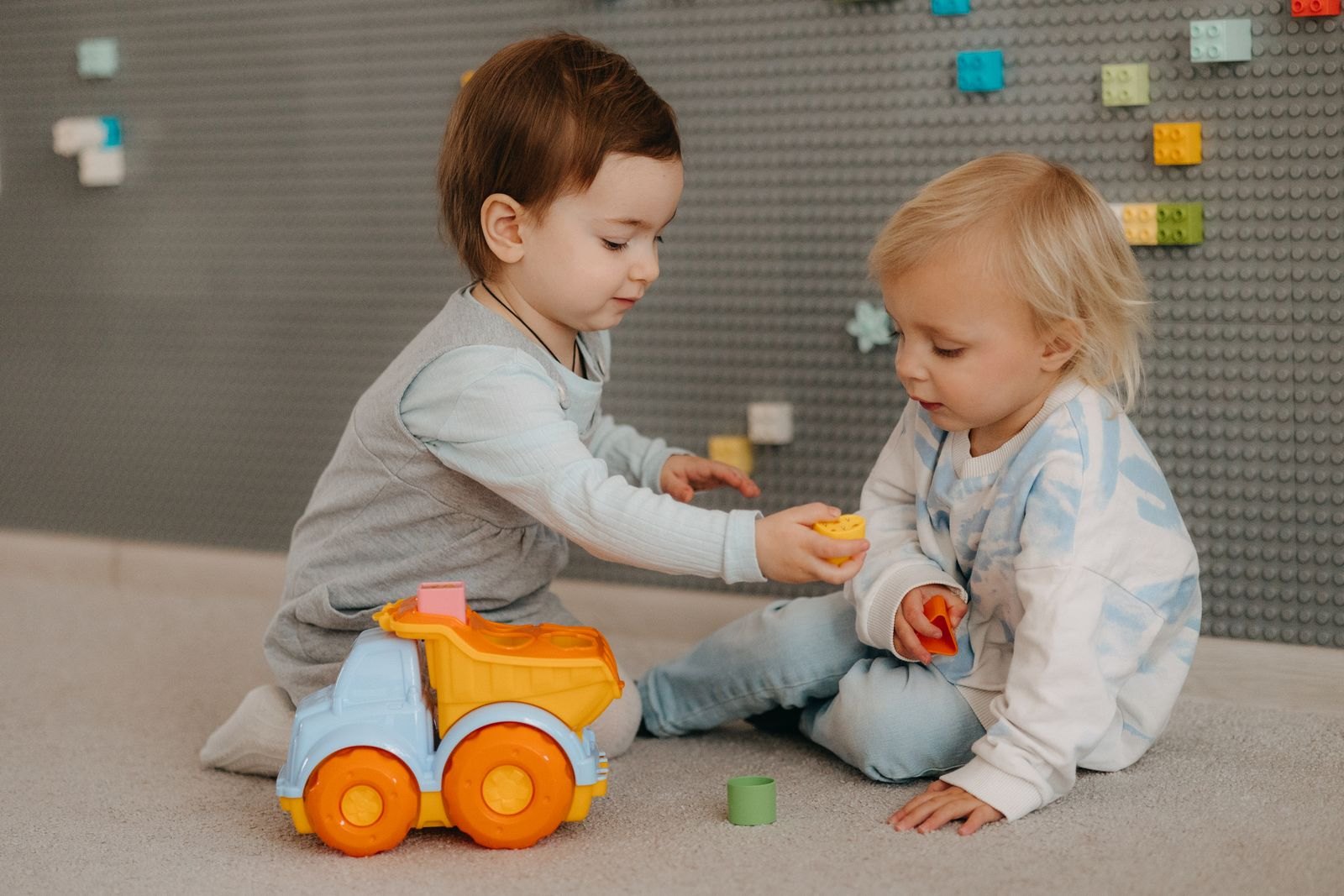
Why does a two-year-old shriek like something's been stolen the moment another child picks up a toy they hadn't touched in twenty minutes? To a parent standing nearby with an apologetic smile, it can look like pure selfishness. To the toddler, something much bigger just happened.
What Parents Commonly Get Wrong
The first mistake is reading refusal to share as a character flaw. A toddler who won't hand over a toy isn't showing you who they'll be at eight or eighteen — they're showing you exactly where they are developmentally right now, which is a very different thing. Labeling a two-year-old "selfish" treats a normal, temporary stage as a permanent trait.
The second mistake is assuming that forcing a handover teaches generosity. Physically taking a toy from one child to give to another mostly teaches that toys get taken without warning — it doesn't build the internal sense of wanting to share that actual generosity requires later on.
The third mistake is treating every object the same. A toy a toddler was actively building with a minute ago and a toy that's been sitting untouched on the floor for an hour aren't equally "theirs" in the moment, even though both technically belong to them — but toddlers don't yet separate ownership from active use, so both can trigger the same reaction.
Why This Happens
Sharing is genuinely a two-part skill: understanding that another child also has wants, and trusting that giving something up doesn't mean losing it forever. Neither piece is fully online yet in toddlerhood. Object permanence for social exchanges lags behind object permanence for objects themselves — a toddler knows a hidden ball still exists, but doesn't yet reliably trust that a toy handed to someone else is coming back.
There's also a self-concept piece. Toddlers are in the middle of figuring out where they end and the world begins, and possessions are one of the clearest, most concrete ways to test that boundary. Saying "mine" about a toy is, developmentally, not so different from saying "mine" about a hand or a foot — it's part of mapping out what belongs to a separate, independent self.
What Actually Helps
Teaching "trade" instead of "share" tends to work better for this age, because it gives a toddler something concrete in return rather than asking them to just give something up. Offering a second toy in exchange respects that a toddler isn't ready to share on faith alone.
Visual timers help for turn-taking with a single high-interest item — a toddler can watch time run out rather than relying on a parent's word that it's almost their turn, which asks for a level of trust the situation hasn't earned yet.
- Keep duplicates of the most popular toys on hand for playdates so two children aren't negotiating over the one thing every toddler in the room wants.
- Narrate what's happening out loud ("You're still using that, and she wants a turn too") instead of jumping straight to a command — it helps a toddler feel seen instead of overridden.
- Let a toddler finish an active turn before asking them to hand something over; interrupting active play produces a much bigger reaction than a natural transition point does.
FAQ
Does refusing to share mean my toddler will grow up selfish? No — sharing readiness tracks with developmental stage, not future character, and it improves steadily as a toddler's sense of trust and perspective-taking develops.
Should I force my toddler to share anyway? Physically taking a toy away rarely teaches the intended lesson and often escalates the moment — trading, timers, and narration tend to work with a toddler's stage instead of against it.
Next playdate, skip the "you have to share" script entirely and bring a duplicate toy or a simple visual timer instead — it swaps a fight your toddler isn't developmentally ready to win gracefully for a system they can actually use.
More for this stage
 5 min read1 views
Toddler Hitting: Is It Actually the Same as Toddler Biting?
Toddler hitting isn't the same as toddler biting — the causes differ, and so does what actually helps. Here's the real difference explained.
 4 min read0 views
Potty Training Age vs. Readiness Signs: What Actually Works
There is no single magic age for potty training. Pediatric guidance points to specific signs instead, and here is what actually predicts success.
 3 min read1 views